
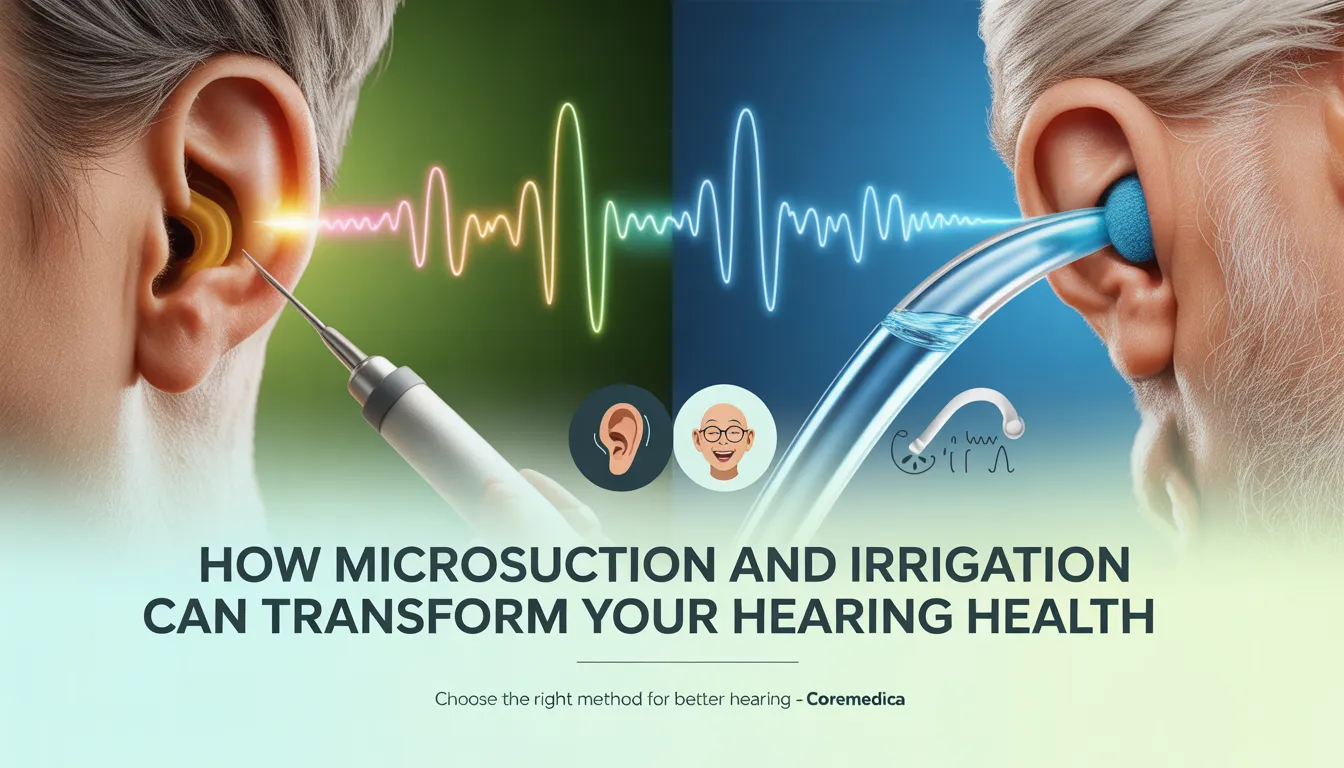
How Microsuction and Irrigation Can Transform Your Hearing Health, and Which One Do You Want to Use?
Table of contents
- Understanding Earwax Build-up and Its Impact on Hearing
- Breaking Down Microsuction and Irrigation: A Head-to-Head Comparison
- Safety First: Risks, Considerations, and Age-Specific Factors
- Backed by Science: Evidence and Long-Term Outcomes
- Busting Myths: Common Misconceptions and Long-Term Impacts
- Choosing the Right Method: Your Personalized Guide
- FAQ
Struggling with muffled sounds or that frustrating feeling of blocked ears? You’re not alone – earwax build-up affects millions in the UK, with around 18 million people experiencing some form of hearing loss, including over 50% of those aged 50 and above. This common issue can lead to reduced hearing clarity, tinnitus, and even increased infection risks, impacting daily life from conversations to balance. Fortunately, professional earwax removal methods like microsuction and irrigation offer transformative solutions, restoring sound quality and preventing long-term complications. In this guide, we’ll compare these techniques, backed by evidence, to help you decide what’s best for your hearing health—especially if you’re in areas like Southampton or Portsmouth where accessible services make a difference.
Understanding Earwax Build-up and Its Impact on Hearing
Earwax, or cerumen, is a natural protective substance produced by your ears to trap dirt and prevent infections. However, when it builds up excessively—known as impaction—it can block the ear canal, causing symptoms like muffled hearing, earache, tinnitus (ringing in the ears), dizziness, or a sensation of fullness. This isn’t just annoying; untreated build-up increases infection risks and can contribute to progressive hearing loss, particularly in older adults where earwax often becomes drier and harder to clear naturally.
Statistics highlight the scale: In the UK, impacted earwax affects about 10% of children, 20% of adults, and 30% of seniors, with prevalence rising to 80% among those over 70. The Royal National Institute for Deaf People (RNID) estimates that by 2035, hearing loss could affect 14.2 million adults, driven partly by untreated wax issues 1. For older adults, age-related changes like thinner ear canal skin exacerbate problems, potentially linking to broader issues such as social isolation or even a fivefold increased dementia risk in severe cases.
Effective removal through methods like microsuction or irrigation can transform this by restoring clear hearing, reducing infection risks, and improving quality of life – think better social interactions and fewer balance issues. Sources like the NHS and WHO emphasize early intervention to prevent complications, with studies showing that clearing wax can immediately alleviate symptoms and support overall ear health 2.
Breaking Down Microsuction and Irrigation: A Head-to-Head Comparison
Both microsuction and irrigation are professional earwax removal techniques, but they differ in process, tools, and suitability. Understanding these can help you choose based on your needs, especially in UK regions where services like those from CoreMedica in Southampton and Portsmouth offer convenient clinic or home-visit options.
What is Microsuction?
Microsuction uses a gentle suction device guided by a microscope to remove wax. The procedure typically lasts 15 minutes, performed in a clinic or at home. Tools include a specialized pump and thin tube for precise control, minimizing contact with sensitive ear structures.
- Pros: Highly effective for hardened or impacted wax, with success rates up to 95% in studies; painless and quick; no water involved, reducing infection risks; suitable for most ear conditions.
- Cons: Can be noisy (though brief); requires a trained professional.
At CoreMedica, microsuction is our specialty, available via clinic appointments in Bitterne, Southampton, or home visits across SO and PO postcodes, ensuring safe, expert care without GP referral.
What is Irrigation?
Irrigation, also called ear syringing (though modern versions use controlled low-pressure water or saline), flushes wax out with a stream of fluid. It takes about 10-20 minutes, often in a clinic setting, using an electronic irrigator for safety.
- Pros: Effective for soft wax; quick for mild cases; widely available.
- Cons: Risk of water pressure causing discomfort or perforation; not ideal for perforated eardrums or infections; may push wax deeper if not done correctly. Linda, our Irrigation expert is on-hand on a Thursday afternoon for irrigation clinics.
Transformative Benefits: Both methods restore hearing acuity – microsuction often provides immediate clarity for stubborn wax, while irrigation excels in flushing softer build-up. They reduce infection risks by 50-70% in regular users and enhance life quality, with patients reporting better social engagement and reduced tinnitus 3. In the UK, CQC-registered services like CoreMedica ensure compliance with NICE guidelines, contrasting with less regulated global practices.
Safety First: Risks, Considerations, and Age-Specific Factors
Safety is paramount in earwax removal, with both methods backed by guidelines from NICE and the American Academy of Otolaryngology. However, risks vary, especially for older adults who may have thinner ear skin or comorbidities like diabetes.
- Microsuction Safety: Low risk of perforation or infection (under 1% in studies); controlled suction minimizes damage. Ideal for seniors with sensitive ears or hearing aids, as it’s dry and precise. Contraindications include active infections; post-care involves avoiding water for 24 hours.
- Irrigation Safety: Slightly higher risk (2-5% chance of dizziness or minor perforation); water can introduce moisture leading to infections. Not recommended for children under 12, those with perforated eardrums, or older adults with fragile canals. Pre-assessment is key; post-care includes keeping ears dry.
Age-specific notes: For older adults (where 30% face impaction), microsuction is often safer due to reduced pressure. Cochrane reviews confirm both methods’ efficacy when performed professionally, but emphasize expert handling to avoid complications like temporary tinnitus. Always consult for personalized assessments.
Backed by Science: Evidence and Long-Term Outcomes
Research from PubMed, The Lancet, and British Journal of Audiology supports these methods’ efficacy. A 2023 study compared them, finding microsuction 90% effective for impacted wax versus irrigation’s 75%. Meta-analyses show both reduce recurrence by 60% with regular use, preventing chronic issues.
UK-specific data from NHS reports indicate trends toward microsuction for its 95% success rate in older populations. Long-term, untreated wax links to cognitive decline, but removal improves balance and prevents infections, with randomized trials showing sustained hearing benefits over 12 months 4.
Busting Myths: Common Misconceptions and Long-Term Impacts
Myth: “Earwax removal is always painful.” Fact: Modern methods like microsuction are often painless, with only mild discomfort reported in 10% of cases.
Myth: “Home remedies like cotton buds are safe.” Fact: They push wax deeper, increasing impaction risks—NICE advises against them.
Myth: “Irrigation is outdated.” Fact: Updated electronic versions are safe and effective for suitable cases.
Long-term, regular removal prevents chronic hearing loss progression (linked to 5x dementia risk) and balance problems, especially in seniors. Untreated wax costs the UK £30 billion annually in productivity losses, but preventive care sustains wellness.
Choosing the Right Method: Your Personalized Guide
Consider these factors:
- Health History: Microsuction for sensitive ears or infections; irrigation for soft wax.
- Age and Severity: Seniors often benefit from microsuction’s gentleness.
- Budget and Access: Check local UK services like CoreMedica for home visits.
- Alternatives: If neither suits, try drops first or consult an ENT.
Questions to ask: “What’s my wax type?” “Any risks for my age?” For older adults with mobility issues, home services in Southampton/Portsmouth are ideal.
FAQ
Is microsuction better than irrigation for older adults?
Yes, often—it’s gentler and drier, reducing risks for thinner ear canals common in seniors.
How often should I get earwax removed?
Every 6-12 months if prone to buildup, per NHS guidelines 2.
Can earwax removal cause tinnitus?
Rarely and temporarily; it often improves it by clearing blockages.
Are home remedies safe?
No—avoid cotton buds; professional methods are recommended.
In summary, microsuction and irrigation can transform your hearing health by clearing blockages and preventing complications, with microsuction often ideal for older adults. Prioritise professional care to safeguard your wellbeing – book a consultation today at CoreMedica for expert microsuction in Southampton or Portsmouth.